What is a short drama (micro-drama)? The complete guide
 A short drama, free in our appThe Heiress in an ApronHumiliated and fired by the man about to take over the hotel, waitress Giulia learns a minute later that she is its heiress.Watch free in the appFirst 8 episodes free · about a minute each · free app, no card
In short: a short drama (or micro-drama) is a series made for your phone: vertical 9:16 video, episodes of one to two minutes, each ending on a twist that pushes you toward the next. The format started in China, where it is called duanju, and reached the West through apps such as ReelShort and DramaBox. The first episodes are usually free; after that you pay with coins or a subscription, or keep going with ads and bonuses. According to Sensor Tower, short drama apps earned about $700 million worldwide in the first quarter of 2025, nearly four times the year before [1]. This guide covers how the format is built, how it makes money, the recurring genres, and how to try one in five minutes.

We make TotalShort, a short drama app: we say so wherever it matters. Facts about other apps come from their official App Store and Google Play pages and may change.
What a short drama is
The definition in a few lines
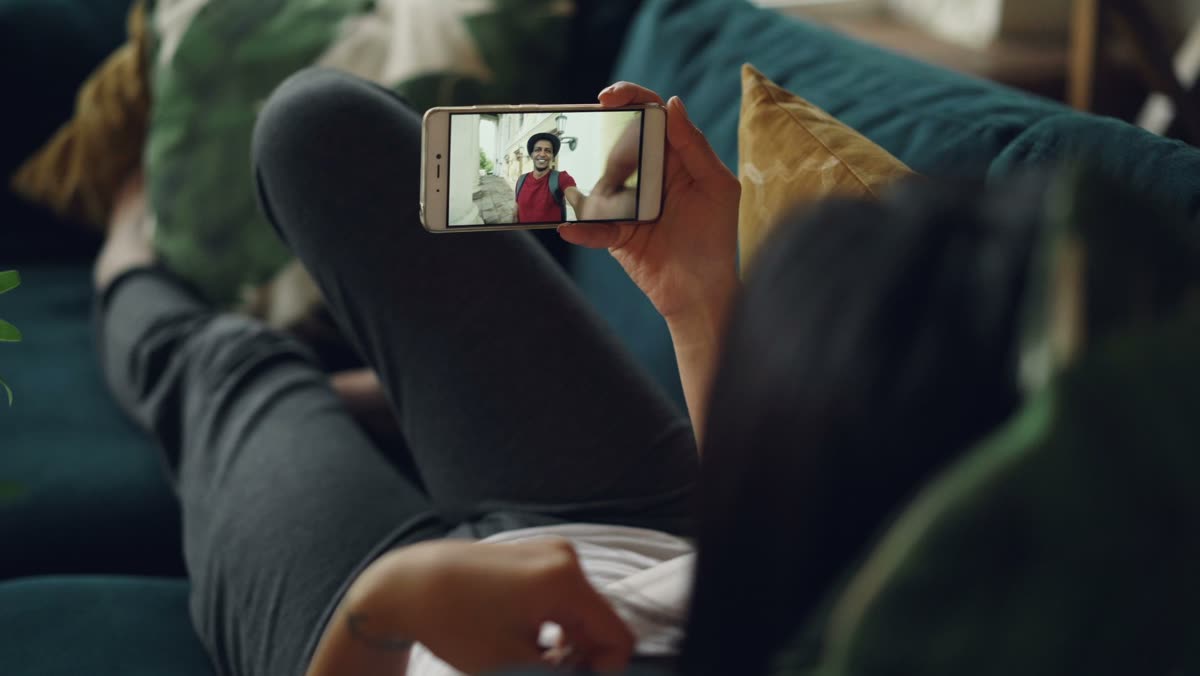
A short drama is serialized fiction, shot or generated, in vertical format: the same shape as TikTok or Instagram Stories. You watch it one-handed, without turning the phone. A series is cut into many tiny episodes; Wikipedia describes typical series as 20 to 100 episodes of one to two minutes each [2].
One format, many names
You will see short drama, micro-drama, vertical drama and, in Chinese, duanju. Wikipedia treats them as synonyms [2][3]. The app stores mostly say "short drama" or "dramas & reels", the press often says "microdrama". Same product, different label.
Where it comes from: Chinese duanju
From web fiction to vertical video
According to Wikipedia's entry on duanju, the format has roots in Chinese online fiction platforms around 2002. The video version starts in 2018 on short-video platforms such as Douyin and Kuaishou, and in 2020 China's radio and television regulator recognized it as a distinct genre [2]. Between 2020 and 2022, the same entry says, vertical shooting and fast production cycles became standard [2].
The Chinese numbers, with a caveat
Wikipedia reports 576 million viewers in China in June 2024, or 52.4% of the country's internet users, and a Chinese market above 50 billion yuan at the end of 2024 [2]. Those are figures from an encyclopedia entry, not an analytics firm: we quote them for scale. For app revenue we use Sensor Tower, below.
How a short drama is built
Vertical, few faces, few rooms
The 9:16 frame changes direction: close-ups, reactions, two-person dialogue, a handful of recognizable places such as an office, a villa, a hotel kitchen. The story moves through confrontations rather than description.
Episodes of one to two minutes
Wikipedia gives a 1-2 minute range per episode [2]. TotalShort episodes, as an example we know first-hand, run roughly 31 to 65 seconds, in 12-episode series.
A cliffhanger every episode
The closing twist isn't saved for a season finale: it arrives every minute. A reveal, a name said in the last second, a door opening. That is why a series tends to get watched in one go, the way you scroll a feed.
The paywall after the first episodes
The business structure follows the narrative one: the first episodes are free to hook you, then the next one asks for payment. Wikipedia describes a hybrid model that combines free episodes, a paywall and an optional subscription [2].
How the apps make money
The mechanics below are the ones declared on the official store listings, read on October 2, 2026 on the US App Store [4], plus ReelShort's Italian listing read on September 30 [5]. We don't quote prices: they change by country and show in the app before you pay.
| Mechanic | How it shows up | Examples from the listings |
|---|---|---|
| Free episodes | The first episodes of each series | TotalShort: 8 per series; for other apps it depends on the series |
| Coins | Virtual currency bought with in-app purchases | GoodShort lists packs from 500 to 2,500 coins |
| Subscription | Auto-renewing, often weekly | ReelShort: valid for 7 days, billed weekly; NetShort, GoodShort and DramaWave list a "Weekly VIP" |
| Ads and bonuses | Free ways to keep going | ReelShort says you can continue by watching ads or collecting daily bonuses [5] |
Coins versus subscription
Coins pay for one episode at a time; a subscription unlocks the catalog for a period. Wikipedia gives a range of $0.30 to $0.50 per episode for pay-per-episode apps [2], but it is a general order of magnitude: the real price is in the app. A weekly subscription you forget, on the other hand, renews by itself. If you need to stop one, how to cancel a short drama subscription has the iPhone and Android steps from Apple [6] and Google [7].
Before you pay: the checks
Seven checks before you pay any short drama app
- Who publishes it?A named developer on the official store listing, not a link from a social post.
- How many ratings?A 4.9 from 200 ratings means less than a 4.7 from 200,000.
- What is the billing period?Weekly, monthly or yearly: it is on the purchase sheet, read it before you confirm.
- Does it renew by itself?Subscriptions renew until you cancel with Apple or Google.
- What does one unlock cost?Turn coins into money before you spend them.
- Is there a free route?Free episodes, bonuses or ads: see how far they really get you.
- Does the age rating fit?Stores rate these apps from 13+ to 18+; check who will watch.
How big the market is
The most quoted numbers come from Sensor Tower's "State of Short Drama Apps 2025" report, published in July 2025 [1]:
- first quarter of 2025: about $700 million in global in-app revenue, nearly 4 times the first quarter of 2024; about $2.3 billion cumulative by March 2025;
- over 370 million downloads in the quarter (6.2 times the year before) and nearly 950 million cumulative;
- ReelShort $130 million in the quarter and $490 million cumulative, DramaBox $120 million and $450 million;
- the United States accounts for 49% of global revenue.
It is a snapshot, not a forecast: it says the category grew fast and earned mostly in the US.
Genres and tropes: what you will find
Stories run on strong, recognizable emotions. To avoid staying vague, here are the tropes declared by the series in our catalog, with a line of plot:
| Series | Tropes | What it's about |
|---|---|---|
| The Heiress in an Apron | Secret heiress, from waitress to owner, enemies to lovers | Fired by the man about to take over the hotel, Giulia learns a minute later that she is its heiress |
| The Ex-Wife | Ex-wife's revenge, evil mother-in-law, humiliation paid back | Livia is invited to the wedding at the Puglia farmhouse she restored, but the house is in her name |
| If I Could Do It All Again | Rebirth, revenge, rival sister | Betrayed, Elena wakes up ten years earlier and this time she knows who will betray her |
| My Contract Wife | Fake engagement, inheritance with a catch, greedy cousin | To inherit a house in Ortigia, Chiara must live there for three months with a fisherman, and she fakes an engagement |
These are close cousins of soap opera and romance novels: a constant obstacle produces a constant twist. The same logic explains why family secrets and enemies who become lovers keep coming back.
Short drama, TV series and TikTok
A qualitative comparison only, because numbers change from series to series:
| Short drama | TV series | TikTok videos | |
|---|---|---|---|
| Format | Vertical, tiny episodes | Horizontal, long episodes | Vertical, single videos |
| Story | One plot told in installments, a cliffhanger every episode | Plot in installments, more room between scenes | Usually self-contained, not a series |
| How you choose | You pick a series and follow it | You pick a series and follow it | The feed decides for you |
| Payment | Free at first, then coins, subscription or ads | Usually a subscription or a license fee | Free, with ads |
| When it fits | A break, bed, a queue | When you have an evening | Scrolling without a destination |
Who it suits and who it doesn't
Someone with ten minutes on the train
This is the format's home turf: short episodes, no need to remember last week's. Start with a short series and stop where you like; the next episode will be there.
Someone who doesn't want to spend
It can be done, with discipline: watch only the free episodes and the bonuses an app declares, and leave alone the subscription that appears after the paywall. Check the renewal period before you confirm any payment.
Someone looking for stories set in Italy
Many series on the big apps are American or Asian productions. TotalShort has a real edge here, with the limit of a catalog still growing.
Someone who prefers classic TV
If you love characters who grow over a season, a cliffhanger every minute may tire you. It is a different genre, not a shorter TV series.
How to watch one in five minutes
With TotalShort episodes running 31 to 65 seconds, you can fit four to eight in five minutes. A path with no sign-up, in the app on the App Store and Google Play:
- Pick a genre from the table above: revenge, fake marriage, second chance, secret heir.
- Pick a series: The Heiress in an Apron, The Ex-Wife, If I Could Do It All Again or My Contract Wife. The first episode's page already shows the story and the dialogue.
- In the app, watch the first episode to the end and notice the cliffhanger: that is the format working.
- If the player allows it, choose audio (Italian or English on the newer series) and subtitles.
- Keep going free up to episode 8. After that, a 12-episode series has four more: one free a day, or 30 coins each.
Glossary
Cliffhanger
The suspended ending of an episode: an event with no explanation, that makes you want the next one.
Paywall
The point where free episodes end and the next one asks for coins or a subscription. On TotalShort it comes after episode 8; on other apps it depends on the series and you see it in the app.
Coins
The virtual currency bought with in-app purchases and spent to unlock episodes. One TotalShort episode costs 30 coins, which is €0.30.
VIP
The subscription that unlocks the catalog for a period. On listings it shows up as "Weekly VIP" or "Membership". NetShort lists ad-free viewing where available among its benefits [4].
Duanju
The Chinese name of the format, 短剧, literally "short drama" [2].
Vertical drama
The English synonym for short drama: "vertical" refers to the portrait screen [2].
AI-made short dramas
The newest twist is series with images, voices and movement generated by AI instead of filmed on a set. A small editorial team can produce stories set wherever it wants, in whatever language it wants, without a crew. The limit is just as clear: there are no real actors, and such a series has to say so.

TotalShort: the Italian option, with its limits
We make TotalShort, so the transparency rule applies. The stories are Italian (Lake Como, Puglia, Milan, Ortigia in Syracuse), made with AI and reviewed by our editors; every series carries a "Serie AI" label and the characters are fictional. Series run 12 episodes, the first 8 free, then 1 free episode a day per series. New episodes unlock with coins (30 per episode) or with VIP, €5.99 a week or €59.99 a year, auto-renewing, with no free trial.
The arithmetic of finishing a TotalShort series
- 8 episodes
- freeevery series
- Episodes 9–12
- 4 × 30 coins= 120 coins = €1.20
- Or the free daily episode
- 1 per series per dayfree in 4 days
- VIP break-even
- €5.99 ÷ €0.30≈ 20 paid episodes a week
Coins are worth €0.01 each. Prices of coin packs and VIP are shown in the app before every purchase. They are in euros; on the US App Store the weekly VIP is set at $5.99, and the store always shows your country’s price before you pay.
The limits: the catalog is still growing and small next to the catalogs of the big apps. You watch it in the free app: iPhone on the App Store, Android on Google Play. If you want a wide choice, the big apps remain the way: we compare them in best short drama apps, and for watching without spending there is free short dramas. One warning: copies uploaded to unofficial sites violate rights and can expose you to scams.
Frequently asked questions
What does short drama mean?
"Short drama" means a brief drama: a series made for smartphones, in vertical format, split into episodes of one to two minutes that almost always end on a twist. You will also hear micro-drama, microdrama, vertical drama or, in China where the format began, duanju. The stories run on strong emotions: revenge, secret heirs, contract marriages, second chances. What sets them apart from a TV series is not the genre but the rhythm, since every episode is written to trigger the next. If it is the first time you hear about it, the quickest way to understand it is to watch one: it takes a minute.
What is the difference between a short drama and a micro-drama?
None: they are two names for the same format. "Vertical drama" and "microdrama" mean the same thing, and in Chinese it is duanju. The label changes, not the product: tiny vertical episodes with a cliffhanger at the end. "Short drama" is the term most apps and listings use, so it is the one we use most in this guide, but none of the others is wrong. If a guide or a store listing uses only one of these terms, you can relax: it is talking about the same kind of series. When searching, try several words, since app names lean on "drama", "reels" or "mini series".
How long is a short drama episode?
Usually one to two minutes, as Wikipedia reports in its entry on duanju, with series that the same source puts at roughly 20 to 100 episodes. The exact time depends on the app and the series: TotalShort episodes run about 31 to 65 seconds and every series has 12, so you can finish one on a lunch break. The larger apps have longer catalogs, and it pays to check the episode count before you start, because a paywall weighs more on a long series than on a 12-episode one.
Are short dramas free?
Partly. Nearly every app gives away the first episodes of each series; after that you need coins or a subscription, or you keep going by other free routes: ReelShort, for example, says you can continue by watching ads or collecting daily bonuses. On TotalShort the first 8 episodes of every series are free, then there is 1 free episode a day per series, and the rest, if you don't want to wait, cost 30 coins, or €0.30. Apps differ, and prices change by country. For the legal alternatives and the detailed math, read our guide to free short dramas.
Can you watch short dramas in another language?
Yes, with a caveat. The main apps (ReelShort, DramaBox, ShortMax, NetShort, DramaWave) offer many interface languages, but that doesn't mean every series is dubbed: many are American or Asian productions, and dubbing and subtitles have to be checked series by series. The fastest way is to watch the free first episode and check the languages and subtitles in the player before spending a single coin or starting a subscription. TotalShort's newer series have Italian and English audio, with subtitles in 13 languages, though our catalog is still growing.
How big is the short drama market?
According to Sensor Tower, in the first quarter of 2025 short drama apps earned about $700 million in in-app revenue worldwide, nearly four times the year before, with over 370 million downloads. By March 2025 cumulative revenue was about $2.3 billion. ReelShort made $130 million in the quarter and DramaBox $120 million. The US accounts for 49% of global revenue. It is a snapshot of that period, measured by a company that analyzes apps rather than from a corporate filing: in-app revenue, in dollars. Newer figures should come from updated reports.
Why do short dramas work?
They combine two habits that already exist: scrolling vertical videos and following stories in installments. Each episode lasts as long as a social video and ends in suspense, so watching another one costs almost nothing. The paywall comes after the first episodes, when you are already inside the story and the question becomes "how does it end?". And that is where apps ask you to pay. To be fair, this is not an explanation proven by a study, it is a reading of the format's structure, the same one that emerges from how the apps describe their products.
Can you tell when a short drama is made with AI?
You should always be able to, because whoever makes a series with artificial intelligence ought to say so. On TotalShort every series carries a "Serie AI" label, the characters are fictional, and the stories are written with AI help and reviewed by our editors. We haven't verified how other apps flag AI-made series: check the series page and the app's notes. The same rule applies to us: declaring AI is a duty of clarity toward viewers, not a detail. For questions about how TotalShort works, the support page has the answers.
Curious about Italian short dramas? Start from the TotalShort home page: the app is on the App Store and Google Play, and the first 8 episodes of every series are free.
Why are short drama apps so expensive?
Because you pay in small pieces, and small pieces are easy to stop counting. Most apps sell single episodes for coins plus plans that renew every week, and each episode ends on a hook that pushes you into the next one. On the US App Store, the lowest weekly VIP plans we found run from $5.99 (GoodShort) to $19.99 (NetShort) [4]. Kept for a year, $19.99 a week comes to 52 × $19.99 = $1,039.48.
The model works for the apps: Sensor Tower estimates that ReelShort earned about $130 million and DramaBox about $120 million in the first quarter of 2025 alone [1]. The fix is boring and it works: turn coins into money before you buy, and write down the renewal date the day you subscribe.
Sources
- Sensor Tower, "State of Short Drama Apps 2025", July 2025: https://sensortower.com/blog/state-of-short-drama-apps-2025
- Wikipedia, "Duanju": https://en.wikipedia.org/wiki/Duanju, read on October 2, 2026
- Wikipedia, "Microdrama": https://en.wikipedia.org/wiki/Microdrama, read on October 2, 2026
- US App Store, official listings read on October 2, 2026: ReelShort, NetShort, GoodShort
- Italian App Store, ReelShort listing, read on September 30, 2026: https://apps.apple.com/it/app/reelshort-stream-drama-tv/id1636235979
- Apple, "Cancel a subscription from Apple": https://support.apple.com/en-us/118428
- Google Play Help, "Cancel, pause, or change a subscription on Google Play": https://support.google.com/googleplay/answer/7018481?hl=en
Get the App
Watch on your phone: swipe, and the next episode starts.
Point your phone’s camera at the code to get the app.